From a raw result
to a clinical picture — physician-verified
Clarus reads each result in the context of the patient — their history at your lab, their condition and their clinical notes — and drafts a clear commentary for the physician to verify. Decision support, not autonomous diagnosis.
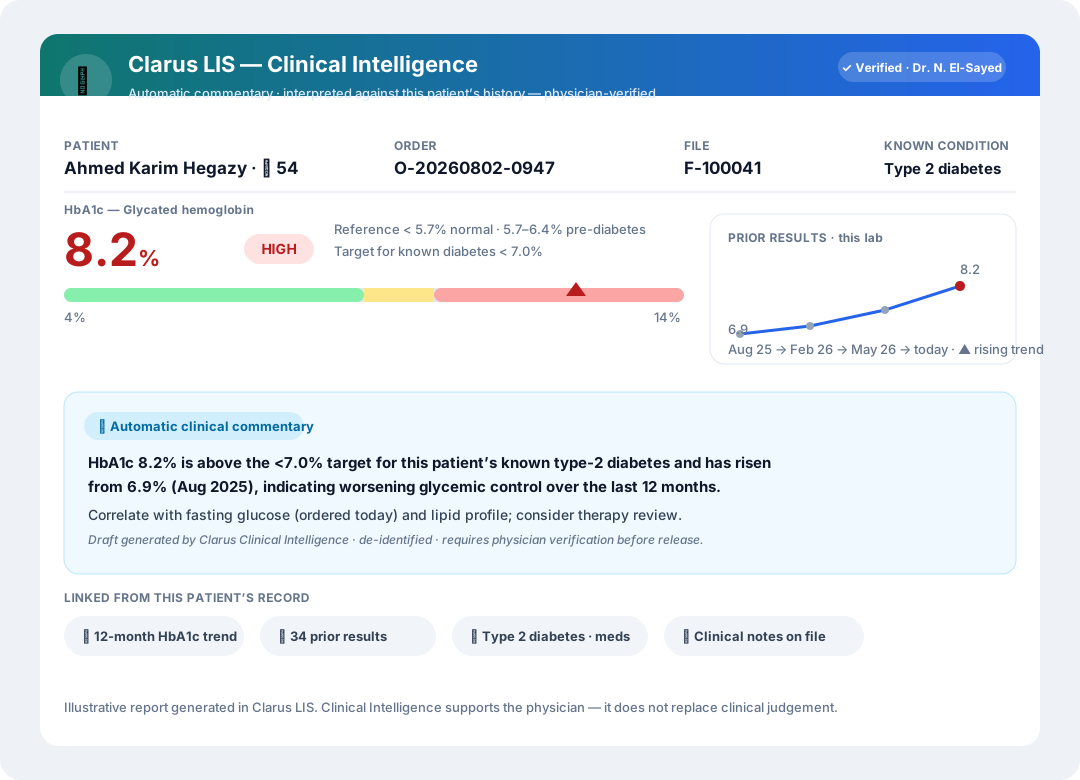
One result, read in full context
This HbA1c report shows how Clarus links a single value to the patient's 12-month trend, known condition and prior results — then drafts a commentary the physician verifies before release. The same logic applies to chemistry, hematology, endocrine and specialty panels.
- ✅ Automatic commentary tied to this patient's history and condition
- ✅ Trend line, delta-check and critical-value flags in one view
- ✅ Always a physician-verified draft — never auto-released
Every result, understood in context
Automatic result commentary
A clear, drafted interpretation for each result — ready for the physician to review, edit and sign.
Read against patient history
Each value is compared with the patient's prior results at your lab, their known condition and clinical notes — not read in isolation.
Critical-value detection
Life-threatening values are flagged and must be acknowledged before a result can be released.
Delta-check & trends
Sudden shifts from a patient's baseline are caught, and trends are shown so the story is obvious.
Ranges by age & sex
Patient-specific reference intervals are applied automatically, so "high" and "low" actually fit the patient.
Reflex & autoverification rules
Configurable rules add follow-up tests and auto-verify clean results — while gating anything that needs a human.
Turnaround-time forecasting
Workload-aware estimates of when results will be ready, so you can manage the bench proactively.
Physician-verified, always
AI output is a draft. Nothing is diagnosed or released autonomously — a qualified professional verifies before sign-out.
De-identified & auditable
Commentary is generated on de-identified data, and every action is recorded in the immutable audit trail.
Smart, but never unsafe
Results flow in from analyzers, Clarus applies rules and drafts commentary, then routes each result to autoverification or human review. AI and CASA results always arrive as "needs human verification".
- ✅ Clean results with passing QC can autoverify
- ✅ Abnormal, critical or AI results are held for a person
- ✅ Every override is documented and audited
Faster decisions, fewer misses
Directional benefits vary by lab, configuration and case mix — Clinical Intelligence assists the team, it does not replace clinical judgement.
Intelligence you can trust
Clinical Intelligence is designed as decision support — transparent, verifiable and always under a professional's control.
Draft, not decision
Commentary is a starting point the physician verifies, edits or overrides.
Context-aware
History, condition, age and sex are part of every interpretation.
De-identified
Generated on de-identified data, keeping patient privacy intact.
Fully audited
Who drafted, who verified and what changed — all on the immutable trail.
Give your physicians context, not just numbers
Start a free trial and see Clinical Intelligence on your own tests.
Create your lab for free ←