Analyzer integration for laboratory systems
Reduce manual result entry and speed release with an architecture prepared for common analyzer protocols and device workflows.
Reduce manual result entry and repeated errors
Analyzer integration helps reduce manual result transfer, transcription errors, and review delays.
- Manual result transfer
- Typing and unit errors
- Delayed review
- No device status visibility
- Unstructured worklists
Correct integration foundations
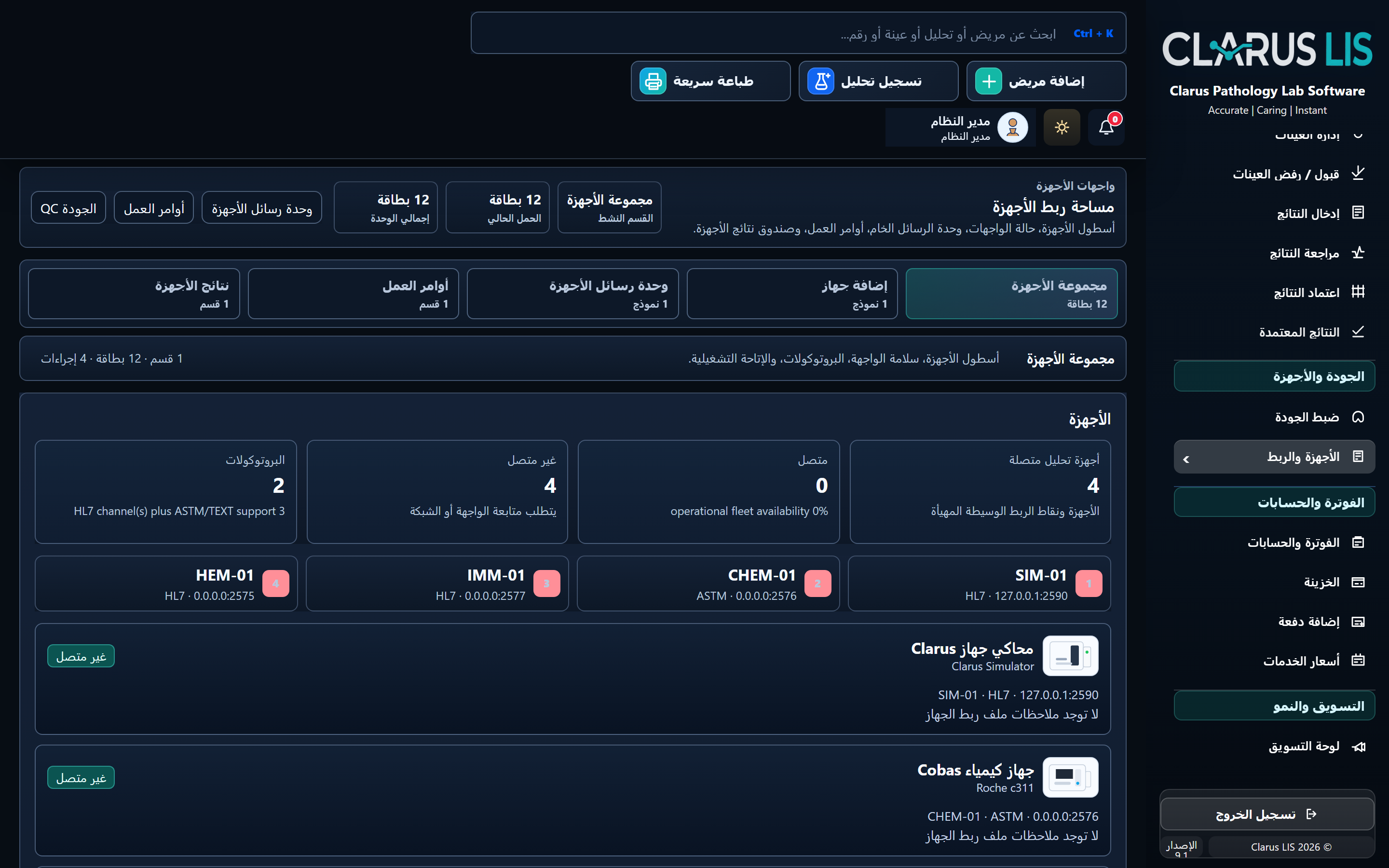
HL7 and ASTM readiness
Prepared for common protocols depending on analyzer capabilities and environment.
Result ingestion
Reduce manual transfer while keeping review and approval controls.
Worklists
Send organized worklists where supported by the analyzer.
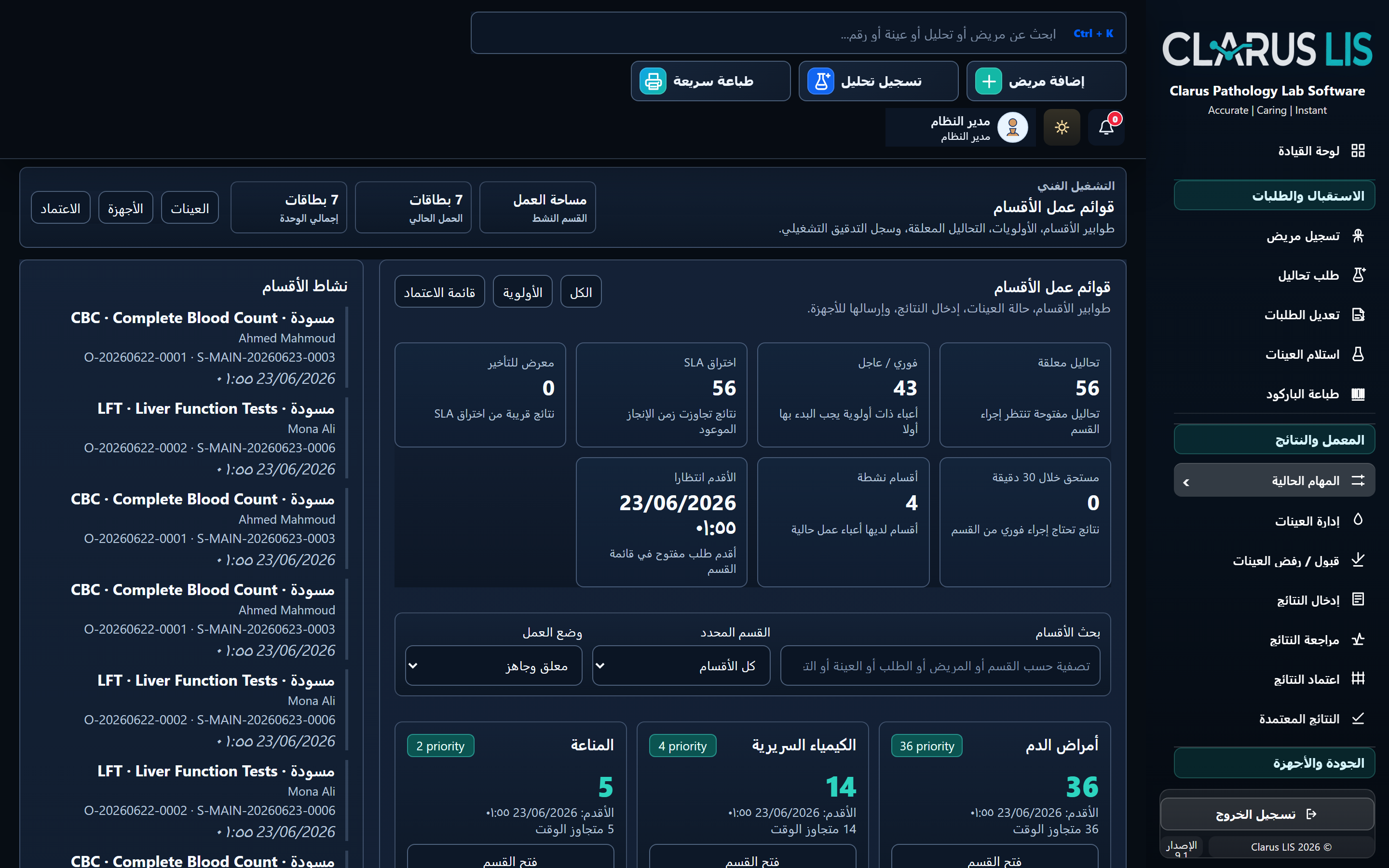
Integration should reflect practical laboratory knowledge
- HL7 and ASTM readiness where supported
- Device-dependent setup is stated clearly
- Manual error reduction remains central
- Sample-to-result workflow stays visible
An experience adapted to each market
🇪🇬 Egypt
Supports Egyptian lab workflows for management, results, billing, and patient communication.
🇸🇦 Gulf
Supports Gulf lab workflows for branches, compliance and premium patient experience — with ZATCA support on the roadmap.
Maghreb
Arabic and French content for North African laboratories and LIS/LIMS needs.
Related Clarus LIS solutions
Analyzer integration FAQs
Can every analyzer be connected?
It depends on device capabilities and protocols, but the architecture is ready for common scenarios.
Does integration replace human review?
No. Integration reduces manual entry while review and approval remain under lab control.
Start with a real Clarus LIS workspace
See patients, samples, results, reports, and billing working together in one cloud laboratory workspace.
Start free